
Batteries for Defence Applications - An Opportunity Borne Out of Conflict
Posted on: in Blog
Since the war in Ukraine began, batteries have transitioned from primarily a consumer and automotive commodity to a critical strategic and military asset. The conflict has accelerated the weaponisation of drones, creating intense demand for portable, high-density power, while triggering a global race to secure supply chains and boost domestic production.
In this blog I will look at how conflicts across the globe and particularly in Ukraine have created a commercial opportunity for battery manufacturers.
Batteries on the Battlefield
Batteries play a crucial role across all four physical military domains: land, sea, air and space.
On land, batteries enable everything from portable devices – radios, night-vision goggles, GPS units – to microgrids and directed energy weapons. At sea, they are used not only in submarines, but also in surface ships, torpedoes and autonomous underwater vehicles (AUVs). In the air, batteries are found in missiles, unmanned aerial vehicles (UAVs) and even fighter jets. And in space, they work alongside solar panels to power military satellites, enabling surveillance, positioning and communications.
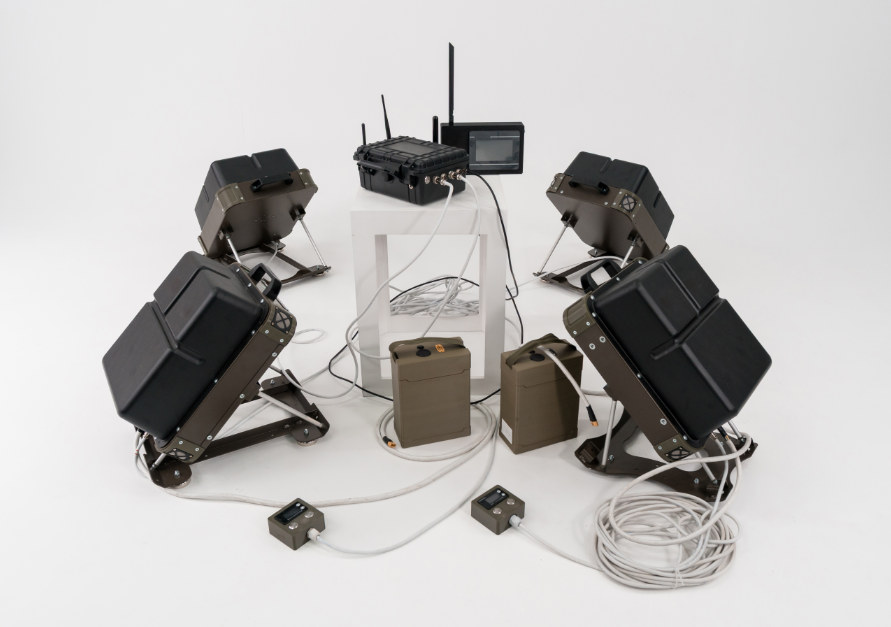
Even in cyberspace – the so-called fifth domain – batteries are used in COMSEC (Communications Security) devices: these are specialised hardware and software components designed to protect telecommunications, ensuring that information remains secure, authentic, and confidential during transmission. These devices convert information into a form that is unintelligible to unauthorised interceptors (encryption) and reconvert it for authorised recipients. Batteries also play an important, if indirect, role by providing backup power to data centres and supercomputers.
Drone War Demand
The war is considered a "first drone war," creating huge, rapid consumption of lithium-ion batteries for FPV (first-person-view) drones. This has led to a desperate, ongoing need for battery components, often relying on Chinese suppliers.
Ukraine manufactured between 2.5 million and 4 million drones in 2025 and aims to produce around 7 million drones of various types in 2026¹.
Ukrainian officials say drones inflict around 70 percent of the casualties suffered by both militaries².
Drone manufacturing is a global commercial opportunity. Ukraine-based company UkrSpecSystems has repurposed a building in Mildenhall, UK in order to produce the unmanned aircraft as part of a £200m investment. When fully operational it will be capable of making up to 1,000 drones a month³.
Energy Security & Infrastructure
Russia’s attacks on Ukrainian infrastructure have made battery storage, such as the 125 million Euro project in Ukraine, crucial for grid stability.
Russia’s recent strikes on Ukraine’s energy facilities – from gas pipelines to power grids – have raised concerns about Kyiv’s ability to keep power stable during winter time as demand spikes. This situation has increasing made the country’s battery storage capability a crucial priority for grid stability.
Here, the batteries serve as backup power, automatically kicking in if a power plant goes offline, helping prevent blackouts and giving engineers time to restore the main grid.
A large project, completed in six months from March to August 2025 at a cost of €125 million ($146.5 million), was built faster than similar projects4. The combined systems can store 400 megawatt-hours of electricity, enough to power roughly 600,000 homes for two hours.
Which Battery Works Best?
There is no single universal battery for all applications, especially for defence. Batteries differ in chemical composition and parameters such as energy and power density, durability, and safety. Batteries used in missiles differ significantly from those used in fighter jets, and heavy energy storage systems for microgrids are not suitable for lightweight portable devices. Furthermore, military batteries must operate reliably under conditions of extreme temperatures, shock, and vibration, while maintaining consistent performance.
In the next episode of this series, I will describe in more details the requirement placed on batteries for defence applications.
¹ https://www.cfr.org/articles/securing-ukraines-future-in-europe-ukraines-defense-industrial-base-an-anchor-for-economic-renewal-and-european-security
² https://www.npr.org/2025/06/07/nx-s1-5422306/the-many-ways-ukraine-carries-out-unprecedented-drone-attacks
³ https://www.bbc.co.uk/news/articles/cy0dvjwygk1o
4 https://www.kyivpost.com/post/61515#:~:text=ISW%20Russian%20Offensive%20Campaign%20Assessment,half%20of%20Ukraine's%20generating%20capacity